All Categories
Featured
Table of Contents
Capital flows into the GCC have actually been on the rise over the last few years. Over the last few years, foreign direct investment Gulf reached an all-time high as federal governments went complete steam ahead with their facilities, tidy energy, transport passages, and advanced manufacturing zone jobs. This also reflects wider foreign investment patterns in Gulf region 2026.
Simply by their relocations, they have actually become a beacon for global financiers seeing that the area is devoted to long-term economic change. A lot of these programs connect directly to major Gulf facilities tasks. These new markets, away from oil, can be beside none in terms of returns for those venturing into them with a long-term view and exploring Gulf investment opportunities that continue to broaden in scope.
Why International Capital Inflows Change in 2026?Hardly any growth comes without its own set of problems. The Gulf economies 2026 are still oil-dependent and susceptible to market changes. Federal government spending plans and advancement plans will be under heavy pressure if oil costs remain low for a long period of time. While some nations have actually accomplished terrific turning points in their fiscal reform journeys, others are still vulnerable and need to tread thoroughly.
This is an area where GCC diversification influence on investors 2026 ends up being more noticeable. Diversity likewise differs from one part of the area to another. The huge economies like Saudi Arabia and the UAE are advancing quickly, whereas the little members of the GCC may still be at the starting point.
The investor's image is not total without taking into consideration the issues of geopolitical unpredictability and worldwide macroeconomic shifts. The trade wars, energy transitions, and modifications in global need can influence capital flows into and out of the Gulf. This ties closely to geopolitical threats Gulf, which are never far from tactical evaluations.
Key International Investment Avenues for the GCC Market
These are the genuine growth chauffeurs that are emerging, and they are electrifying portals for the financiers who desire to be exposed to non-hydrocarbon activities. These advancements feed into more comprehensive Middle East financial trends 2026 and form what investors must see in Gulf economies 2026. Changes in policy relating to foreign ownership, financial investment rewards, and trade policies will be the primary factors that influence business environment.
Oil stays an essential income source for numerous Gulf states. Enjoy demand patterns, OPEC plus decisions and commodity cycles. Even with increasing non oil sectors, energy prices still influence everything from fiscal budget plans to market liquidity. Stable currencies are among the highlights of numerous Gulf economies 2026. The rate of inflation has been kept at a moderate level for the many part.
Why International Capital Inflows Change in 2026?The area, which was mainly depending on oil revenues, is now gradually changing into a varied economic landscape with a number of engines of growth. The GCC economic outlook is brilliant due to the expansion of non-oil sectors, continuous reform efforts, and rising foreign financial investment. This is supported by constant foreign investment patterns in Gulf area 2026.
The threats have actually not disappeared, sensible choice making will help bring to light the strong potential for returns connected to growing Gulf investment opportunities. Find out more Blog Site: Click on this link.
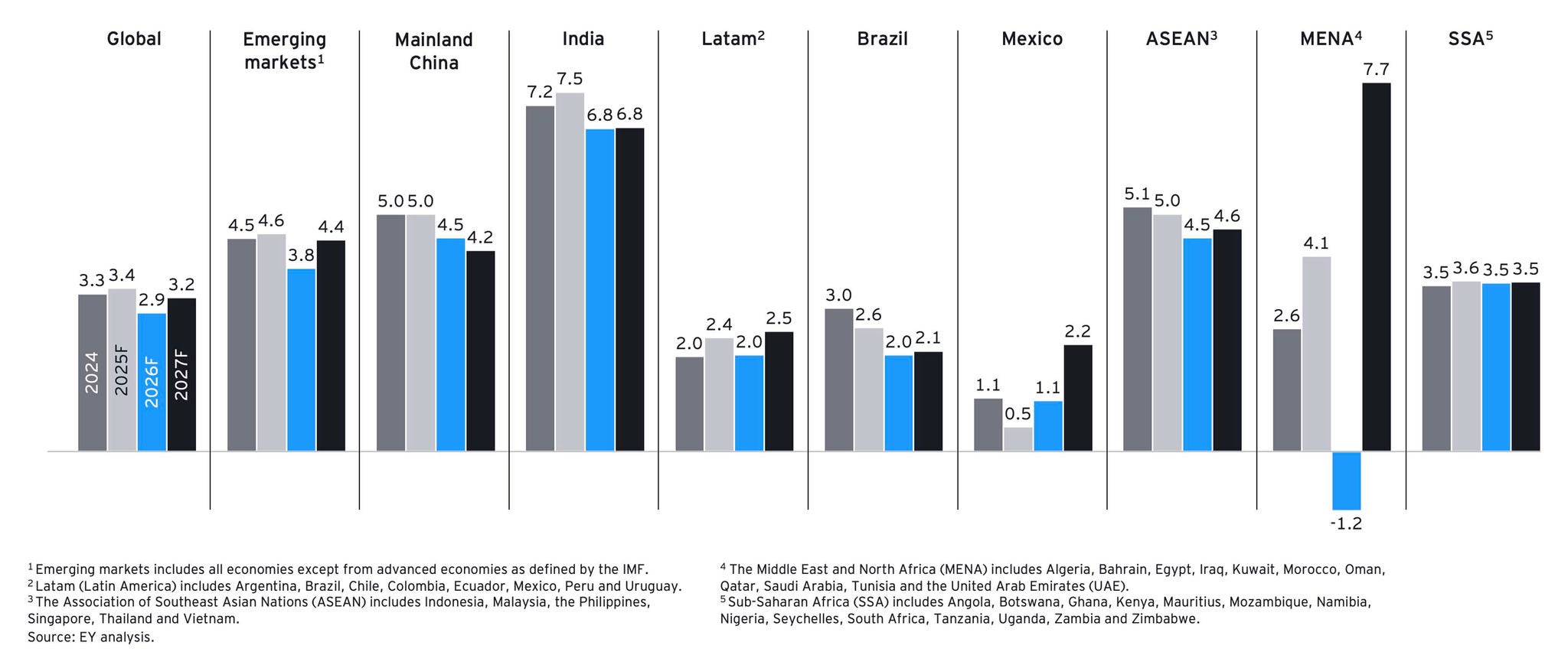
RIYADH: Economies across the Gulf Cooperation Council are forecast to grow 4.4 percent in 2026, speeding up to 4.6 percent in 2027, driven by rising non-oil activity in nations consisting of Saudi Arabia, according to an analysis. In its Global Economic Prospects report, the World Bank said the Kingdom's real gdp is forecasted to grow 4.3 percent in 2026 and 4.4 percent in 2027, up from a predicted 3.8 percent in 2025.
Top International Investment Avenues for the GCC Market
The World Bank's latest forecast broadly lines up with the International Monetary Fund's October outlook, which projects Saudi Arabia's GDP to grow by about 4 percent in both 2025 and 2026. Expanding the non-oil sector remains a core objective of Saudi Arabia's Vision 2030 program, as the Kingdom continues efforts to minimize its enduring reliance on crude revenues.
The area, which was generally dependent on oil revenues, is now slowly changing into a diversified financial landscape with a number of engines of development. The GCC financial outlook is intense due to the growth of non-oil sectors, continuous reform efforts, and rising foreign financial investment. This is supported by consistent foreign financial investment patterns in Gulf area 2026.
The risks have actually not disappeared, sensible decision making will help bring to light the strong capacity for returns linked to growing Gulf financial investment opportunities. Find out more BLog: Click on this link.
RIYADH: Economies throughout the Gulf Cooperation Council are forecast to grow 4.4 percent in 2026, accelerating to 4.6 percent in 2027, driven by rising non-oil activity in nations including Saudi Arabia, according to an analysis. In its Global Economic Potential customers report, the World Bank stated the Kingdom's genuine gdp is projected to grow 4.3 percent in 2026 and 4.4 percent in 2027, up from an expected 3.8 percent in 2025.

Middle East Stock Trading Trends for 2026
The World Bank's newest projection broadly lines up with the International Monetary Fund's October outlook, which projects Saudi Arabia's GDP to grow by about 4 percent in both 2025 and 2026. Broadening the non-oil sector stays a core goal of Saudi Arabia's Vision 2030 agenda, as the Kingdom continues efforts to decrease its long-standing reliance on unrefined profits.

Latest Posts
Analysing the 2026 GCC Economic Outlook
How Economic Shifts Can Shape GCC Markets
Assessing GCC Investment Resilience for 2026